
X
-
Załączniki bezpieczeństwa
Załczniki do produktuZałączniki dotyczące bezpieczeństwa produktu zawierają informacje o opakowaniu produktu i mogą dostarczać kluczowych informacji dotyczących bezpieczeństwa konkretnego produktu
-
Informacje o producencie
Informacje o producencieInformacje dotyczące produktu obejmują adres i powiązane dane producenta produktu.Avalanche Press
-
Osoba odpowiedzialna w UE
Osoba odpowiedzialna w UEPodmiot gospodarczy z siedzibą w UE zapewniający zgodność produktu z wymaganymi przepisami.
Gunther Burstyn, Austrian Landwehr engineer and despiser of the umlaut, created a tank. Perhaps the world’s first tank design, a handsome little machine with a turret and wheeled extensions to help it cross trenches. That was one of several early concepts for an armored fighting vehicle from the dawn of motor technology, and that’s the theme of Golden Journal No. 44: Imperial and Royal Panzers.
It was always inevitable, that Infantry Attacks would come to include tanks, too. There are four types of proposed tank in Imperial and Royal Panzers, two versions of Burstyn’s little panzer, and two different Russian proposals. So of course, they get to fight each other.
The first of the Austro-Hungarian tanks is Burstyn’s Motorgeschütz, a small vehicle that looked very much like the real tanks of a generation later. Burstyn first drafted his design in 1911 and sent his plans and a scale model to the War Ministry, which showed enough interest to answer him but not enough to provide funding. Without a patron, or connections to private industry where a prototype might be built on speculation, Burstyn had no easy path to continue his project and let it drop; his status as a Landwehr (the regular army of the Austrian half of the Dual Monarchy, which had less prestige than the Common Army) rather than Imperial and Royal officer probably didn’t help. He would go on to become an accomplished engineer, and is best remembered today as the inventor of the Dragon’s Teeth anti-tank obstacles deployed by the Germans before and during World War Two.
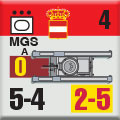 The original Burstyn design featured a 37mm quick-firing gun and a machine gun. We’ve also included an improved model; surely had his proposal been adopted a larger and more powerful version would have eventually followed. The 1918 Model has a Skoda 66mm gun and two machine guns, and a more powerful engine.
Imperial Russia also had its mad inventors, and we have their proto-panzers, too. In August 1914, Russian aircraft designer Alexander Porokhovschikov drafted a cute little tracked vehicle he called the Vezdekhod, or “all-terrain vehicle.” It had a single, wide track under its body, and carried one person. Its 10-horsepower engine could not bear the additional weight of armor plating, and the Imperial Army abandoned the project after a single prototype had been built and tested.