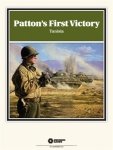
Patton's First Victory: Tunisia
168,30
PLN

With Golden Journal No. 60: 9 April 1940, we introduce the Royal Danish Army to the Panzer Grenadier series. The title is the date on which German troops rolled into Denmark, with the government quickly ordering the Royal Army to stop its resistance. But not before it had indeed resisted, and those battles are at the heart of our Journal.
Like most European nations, Denmark paid little attention and even less money to national defense in the years following the First World War. Military stood at about 1 percent of Gross Domestic Product (GDP), even less than her Nordic peers, much less neighboring Germany. As tensions rose and war seemed more likely, Danish spending rose as well, to 1.2 percent of GDP in 1935 and 2 percent in 1938. This was still much less than countries like Sweden (rising from 1.6 percent to 2.7 percent). Industrialization came late to Denmark, and in 1940 the kingdom’s economy remained primarily agricultural.
As Europe prepared for a new round of war, some nations had trouble acquiring new weapons, even when they had the cash and the will to spend it. Denmark had a small arms industry of its own, that could supply at least light arms, support weapons, and some artillery. Tanks and motor vehicles lay beyond the ability of Danish industry to produce, and beyond the limits of Danish military budgets. Most Danish spending went to the Royal Danish Army, and did provide a reasonably well-equipped force.